Opinion and Advice, Uncategorized

When It’s Time to Leave (Your Job, That Is)

Job hunting is stressful, and never so stressful when you have bills to pay, and no money coming in. It’s not just a financial worry, it strains your mental wellbeing and your sense of self worth, too. To be employed, at the very least, gives a sense of independence, usefulness and productivity. No shit, Sherlock, you might say. But in a world in which Universal Credit and benefits are treated by some as a wage from a career they are fairly cosy in, being employed feels to some like a choice between taking money away from others who need those benefits more, or having that feeling at the end of the day when you can put your feet up, knowing you’ve earned it. 

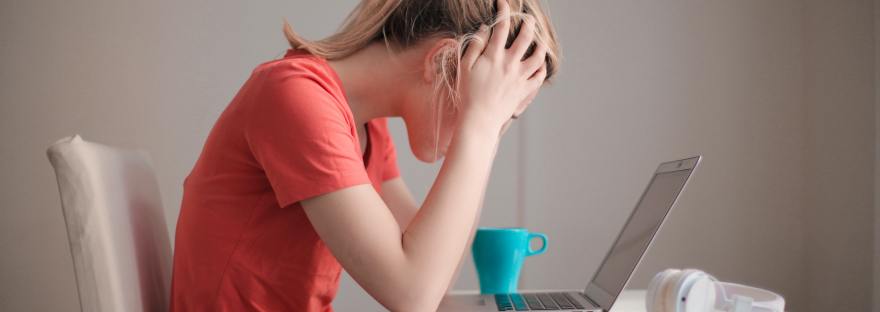
But there comes a time in so many jobs that many of us often dread; the knowledge that we need to move on. Maybe it’s boring, or dead end, or it just doesn’t pay enough anymore. And while having a secure income during the pandemic has felt more and more like a privilege, this imposing shadow might only grow as the world begins to open up. I write this blog now, as this is currently what I’m going through. For around 9 months now, I’ve been experiencing what I can only define as anxiety around my job; there’s no chance of advancement, and, to me, it doesn’t feel like I’m contributing anything to society beyond my taxes. I’m not helping anyone in the way that I want to, and instead I sit for around eight hours a day wondering what the hell I’m doing. 

So what’s stopping me from moving on? Nothing at all. Besides, in fact, job security. Today, that is a biggy. Not all of us can afford to chase our dream careers. Me? I want to be a counsellor. But in my neck of the woods, training and education beyond my degree and level four diplomas would take me out of work for more time than my managers would allow. I would need whole days to travel to a university an hour’s train ride away for lectures and placements and no earnings. Where I live, unless you want a career in finance, it’s very difficult to find anything.

But that doesn’t mean you should dismiss those concerns. So, what are the signs?

  1. Listlessness – listelessness, or boredom, or just absolute disinterest in your job is a red flag. This might be borne from a dull and monotonous task, a feeling that you’re not getting any closer to what you want to achieve, or frustration with work colleagues who seem to think that one mistake means the difference between life or death, even though it doesn’t.
  2. You can’t think of anything you like about it – at work, it’s not just the task in hand to think about. It’s the building, it’s the perks, it’s the colleagues. You spend more time with these people than most, maybe even anyone. That’s one terrifying thought, particularly if you’re not a fan. Maybe one of them has an annoying voice, while such and such over the way talks way too loudly about her personal life, and the guy behind you is too keen on telling everyone how educated and well connected he is socially. It might not be anything at all, and they might simply be lovely people who just don’t tickle your fancy. Work isn’t about making friends, but you spend around a third of your day with these people, so you may as well like them
  3. Any other job seems to have more purpose – There’s tons of jobs out there, some more desirable than others. That’s just how it is. But if they mostly seem like something else you’d sooner do because they tick a box that is presently unticked, don’t be too hasty. The grass isn’t always greener, but it’s worth the peek. 
  4. Anything seems like it would be better than this – I once had a job that was so awful, I would look out of the window and envy the people sat outside on a bench, going about their day, simply because they didn’t work in this place. I left after three months with no job lined up, but it was the right thing to do. I do feel like I did myself a disservice by not walking out with my bag or calling in during my lunch of watching the ducks, but alas, when you’re favouring watching the ducks over work, maybe you should rethink your path.
  5. Anxiety – anxiety over going into work is not normal, and it shouldn’t be normalised. If you believe that your work is triggering it, have a word with your manager. But, don’t expect it to go away just like that. If you hate your job so much, or you’re simply so bored with it that it triggers anxiety attacks, take yourself away from the situation and nip it in the bud. I don’t mean quit, but mental health sick days need to be encouraged if they are ever going to be accepted as just as essential as actual sick days. No job that doesn’t feel important to you is worth making yourself sick over. 

There are tons of other signs to look out for, because they are personal to you. The above are only my personal experiences. But what can you do in this situation? It’s always scary to make that choice to move on, but theres a way to go about it. If you’re having doubts about your employment, have a word with your immediate superior and let them know that you’re thinking about looking for another job. If you have that kind of relationship, they will only respect your openness for being so honest. Keeping your CV up to date can give you the sense of worth that you may have forgotten from months or years of doing the same thing over and over. We’re constantly learning new skills, and remember to include an ‘about me’ section, because not everything is learned on the job. Also, if you’re on the fence about leaving your job despite your reservations, volunteering might be for you. 

Good luck!
artwork, Uncategorized

Things I Want to Say to Artists on Social Media

Social media can be great, but it can also be toxic. Pointing out the obvious, I know. But I have a specific reason for that. As an artist, I know how easy it is to get sucked into the world of follow for follow and what not. This is my second post on this topic, because really it just makes me sad to see people burn themselves out chasing likes, follows and fame.

The truth is, there’s a sad reality around being an artist on social media. And it’s this; for every artist who gets recognition, there’s hundreds who give up on their craft, or their aspirations to be a good or great artist, because they think no one is paying attention to their work. They think, “if no one likes my work, this means I’m no good,” or the like. This is not the case. I’m going to be blunt here, I’ve seen many great, skilled artists with very few followers on Instagram, while those with limited skill have thousands. I myself have under 300, and this used to bother me.

And then, the other day, I saw on Facebook someone griping about not being able to get above 750 followers, because people followed and unfollowed days later, and so posted her link on a few art pages for people to follow. This was responded to with the dreaded ‘follow for follow’ requests.

Now, I think what her problem was was that each person who unfollowed was formally expecting a follow in return, and so stubbornly clicked that button in protest. So many artists want something in return for their simple click of a button, and that is how it has become such a powerful action, the difference, for some, between having a day confident of one’s skill, or thinking you’re a failure because not enough people liked your latest post.

But I’ve being thinking about this during this pandemic. Afterall, if anything it has been a time for reflection, where social media has become such a prized tool for networking, what with an opportunity for small businesses to potentially thrive in the face of mass store closures. Drawing may be your income, but for those of us who just like to create, where do you draw the line?

This is how I see it;

1. Being an artist is often about reciprocation ; you’ll get a follow or a like because people like your work. Sometimes, however, it’s because they want your likes and follows in return.

2. If you draw for likes, you’re not creating for good reasons ; drawing is such a sharable, useful skill. But what is the point in doing something that ought to be relaxing, inspiring or just something that is meant to bring you joy, if you’re going to get stressed and miserable over it instead?

3. Stick to what you’re good at ; some people can pluck an idea out of their head, and put it to paper. Others can replicate a face directly with pencils. But if you have a niche, no matter how obscure it is, that will bring you much more happiness than attempting a shareable fan art piece of the latest movie character you probably don’t care about.

4. Think about turning art into your income; really think about it. Drawing day in and night out might sound like a tremendous gift, but do you really want to turn something you love into a chore? I remember when I was fourteen, having started my GCSEs at school, and I chose media instead of art. I was told this was stupid numerous times because, for me, they thought art would be an easy win. Even one of my teachers told me I wasted a GCSE. But I also love film, and thats why I chose media studies. It wasn’t wasting a qualification in anyway, and if anything, I feel I love my skill more because I have a choice in it. But customers, in short, can be crabby. Most are delightful, don’t get me wrong, but you also get the ones who don’t understand that a drawing is an interpretation, not a print out. Drawing is a honed skill with a person’s hand doing it, not a soulless computer. It takes time, resources and confidence to put yourself out there, and confidence can shatter just like that.

I’m not trying to put anyone off. In fact, I’m trying to be that pragmatic person who wants artists to keep loving what they do. If you don’t get so many likes as you thought you would, that’s okay. Van Gogh was questioned, doubted and insulted for his percieved lack of skill, and today is arguably the most celebrated artist of his generation. There’s so many of us now, and so much talent out there. Talent shouldn’t be wasted on shallow things such as likes.

Uncategorized

Adulthood is Who You Are – Not what You’ve Achieved

I got accepted for an apartment yesterday. This might be no big deal for many my age (27) but it is to me. This is not only my first apartment. I’m moving out of my family home.

I’ve been self conscious about this fact, because so many people I know are already married with kids, a house of their own. All that adult stuff we’re told makes you an adult.

But most of my friends haven’t got that far yet. And yet, they still felt like more adult to me. They drive, for one. I don’t. I’ve settled on the fact that I’m just not meant to be a driver, and frankly, I’m okay with that. I’ve failed my test enough now to know its not meant to be.

I have been treated differently for this reason, however. Because I don’t drive or have chosen to stay at home until I could save enough for a deposit, I’ve often been called out for my lack of life experience. But this isn’t life experience. Its just a different life experience.

I’m sure loads of people my age have confronted this… this self anxiety, for want of a better term. Lying awake at night, wondering whether that person is more adult because they’ve done this, or done that. But now I see the use in having these thoughts. It really makes you see just what makes an adult. Is it a belief that as long as you have a car, house and bills, you quality as the font of wisdom? Or is it an awareness that often, these are just drilled into us to keep us spending, because apparently adulthood is so desirable?

So what if my life experience is different? I’ve still done my degree. I’ve still been in full time employment for my whole adult life. I’ve still paid my taxes. I’ve known work stress and anxiety, I’ve travelled much more than those who boast more life experience and have the driving licence to prove it.

So I say this; don’t be self conscious about where you are in life. I’ve gone too long thinking that I’m deserving of the condescension. If I’d followed that path, I wouldn’t feel what I feel now. Being an adult and being a grown up are two different concepts.

Uncategorized

How to Not Lose it While Remote Working

I’ve been working from home now since the first lockdown began, and, i’ll be honest, at first the idea was exciting. I’d never worked from home before, and my head was filled with plans of all the stuff I was going to get done with my time. I’d finally be able to have a proper healthy breakfast, instead of a packet of breakfast biscuits on the train. I’d be able to swap sitting at my desk staring at my phone during lunch for a jog, or yoga, or taking the dog a walk. Anything active. But, as time has gone on and the company I work for has evolved in its strategies to keep us all connected, we’ve all expressed feelings of isolation, and actually missing the social aspects of office working.

But, for me anyway, and as for many, remote working might be here to stay, at least in some context. It’s been a mixed bag, but there are some ways you can not only cope with remote working, but make the best of it, too.

1. Take control of your work environment – an office is a public space. While that’s pointing out the obvious, while we’re feeling lonely and cut off, it might be an idea to remind yourself of the more negative points of sharing a work space. If you want a window open, open a window. If you want music, play it. If you want all the lights on, power to you. In an office, the control of the environment either comes down to the management, majority, or that one person who throws awareness for others to the wind and opens a window when everyone else is shivering in their coats.

2. Wake up early…but not too early – take advantage of the fact that your desk is only a few steps away. That might mean staying in bed for a few minutes more, doing the housework, or a getting a workout in.

3. Get dressed – I’ve made the mistake of slipping into the habit of staying in my jams a few times, and those are the days I feel a bit rubbish about things. I love getting ready, and putting the time into one’s appearance can make a world of difference. It doesn’t matter whether you’re going to be on camera; jams are for sleeping in and lazing around when you feel like it. But a productive mindset might just start with a shower and fresh clothes.

4. Split the day with something active – whether you get an hour or half an hour for lunch, that time can have many possibilities in how it can be used, that just might not be accessible in normal office circumstances. Go for a run, or find a workout on YouTube. My office has become my gym, too, with a desk treadmill at the side. This has also taught me that I dont need a gym membership, so in the long run (huhuh) I’m saving money, too.

5. Screen breaks – Take them! – I never know what to do during a screen break at work, and end up either working through it because I don’t want to look like skiving, or dashing to the toilet. Because making a cuppa doesn’t take 5 minutes. But now, I do a bit of reading, knitting, or just something else that tickles my fancy.

6. Meetings – particularly during company wide meetings, with one person talking while everyone else is muted and no ones camera is switched on, I’ve done something else. Commissions, finished books, made paper flowers, made apple pie… I’ve had naps, too. Under a blanket, earphones in, lovely.

7. Mindfulness/ meditation – while I’ve been remote working I’ve been listening to a lovely classical radio station called Scala radio, and every day at 2pm they have a mindfulness session. Whenever I put this station on, I get myself comfy, maybe grab some cake or pie that I’ve made, and just listen, all in the moment. Its only about 10 minutes long, but its worth it.

8. Meditation in the morning – branching off of the last suggestion, a bit of meditation first thing does help. Particularly during these anxious times, its nice to just create a moment and breathe. Meditation used to stress me out, because I thought your mind has to be absolutely clear of thoughts to work. Like, you couldn’t think of anything. That’s what alot of guided sessions said, anyway. So I gave up. But thinking you can’t think of anything makes it worse, and you end up thinking because you’ve been told not to. This is the White Bear effect; don’t think of a white bear! Did you? Now, more practices encourage you to acknowledge the thoughts that occur to you, and then recentre. I’ve found that my days are much more relaxed after doing this for around 10 minutes, even if I’m not great at it yet.

9. Make taking care of yourself a priority – it’s easy to get frustrated with the situation. Its easy to allow one run in to effect your day; I know I have. And I know how easy it is to let yourself get worked up over one minute mistake, and maybe you’re worked up because someone has placed disproportionate importance on that mistake. I’ve lost sleep over mine, and thats were vicious cycles begin. But don’t let them throw you off. Eat as healthy as you can, but allow yourself a lapse now and again. Take time out for your creative endeavours, and at the end of your day, relax and think of all the good things that happen. Treat where you went wrong as learning curves, teachable moments.

10. Have fun with it! – play your music loud (be considerate of the neighbors, mind) and just sing, or dance, at your desk. I do. No one can see or hear you (if you’re alone, anyway) and if they do, like the window cleaner did earlier today when I had no idea he was cleaning an open window, shrug it off. It probably gave him a laugh. People need a laugh right now, so good deed to me!

Uncategorized

So what if you’re not a career type?

I’ve had a few jobs in my time. Not as many as some, but maybe more than others. That makes me sound like I can’t hold down a post, but I spent 5 years at my first company while I studied for my degree part time. It was clerical, mundane, and same old. And I wouldn’t change that for the world.

There’s a comfort in repetitive jobs. Whether yours may be desk post like mine, or production operative (I’ve done a bit of that, too) or call centre job, we’ve probably all had a moment (or moments) where we’ve doubted the importance of our role in the wider scheme of things. Scrolling through Instagram doesn’t help, watching your friends, or strangers for that matter, apparently ‘doing life’ better than you. All these phrases and buzz words start emerging for what we see; living their best life, winning at life, life goals. Career types who travel for work and wear sharp, flattering outfits. Al fresco breakfasts on the patio of the villa they’re staying in for the week to get away from the hustle.

It can make one feel quite inadequate, can’t it? But the grass isn’t always greener, as they say.

As I’ve said, I work a desk job. Its dull, and for now, a bit dead end. But I can listen to books on Audible, and go for a job in my lunch break. I can work at home, and I count it as a blessing that my work has gone otherwise uninterrupted during the pandemic.

I’ve known some of these career types, however, personally. It isn’t always pretty, and there’s a lot of sacrifices. My fiance was a teacher for about a year, and goodness, he hated it. The good intention was there, and I’m sure he was a good teacher, too. But that was only a small part of a job that demanded too much evening time, too much weekend time, and holidays that could only be taken at certain times of the year. He made himself ill for a long time, and finally he quit to work for my old company. Someone else I know has no hobbies, and has never travelled out of the country (we live in the UK) because he just doesn’t see the point. That’s okay, but the career he has placed so much importance on is actually going nowhere.

Now, I am only speaking from my point of view. There are many people out there with careers and lives they enjoy, and have found that balance. But I reckon there’s more of us who have had those doubts late at night, knowing we have the potential. Sometimes, knowing we have potential is good enough. But sometimes, it makes it worse. It makes it feel like we’re wasting a gift.

But I think, from my experience, careers aren’t worth it. Last year, I had the opportunity to work in a counselling setting. I’m a qualified counsellor, and I’d be getting the chance to interact with patients. I was also assured in the meeting that in time, I might be referred to train as a counsellor myself.

But I hated it. I dont know what it was, but I hated it. I missed the safety of mundane, repetitive, no stress. I felt guilty, because I’d looked forward to this job so much. But then, I learned that maybe educational endeavours and professional don’t always mix. I learned that sometimes, your aspirations might not always be what you want to do, but what you want to want to do. What you think you should want to do.

So now I’m content with my desk job. I’m well travelled, studying for my masters, with a load of hobbies and I’m writing stories. And I dont think i’d be that person if I was a career type.