Opinion and Advice

The Double Standards of The Snow White Kiss Controversy

I love these pointless little controversies. They always seem to gain momentum during these times of distress, and maybe its because this is a rare time in the present generation’s history when we all have had nowhere to go unless we break a law.

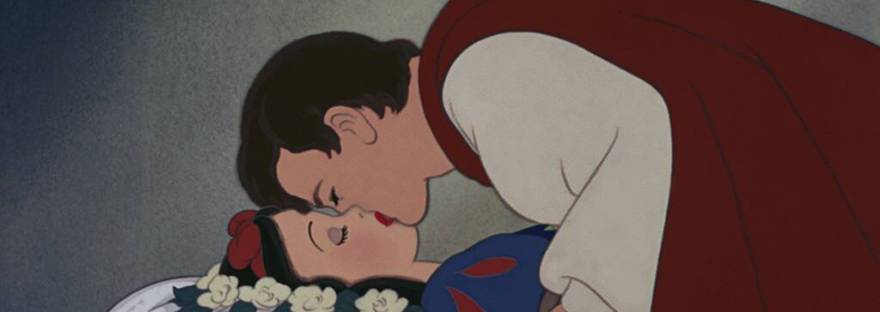
So while this controversy of the non-consented kiss in Snow White and the Severn Dwarves isn’t exactly a new one, the wokeists (I have learned that there is a difference between the ‘left’ and wokeists, like there’s a difference between the ‘right’ and discrimination) have now got the platform with which to insult genuine arguments surrounding feminism and the question of consent. The key insult? That these issues have been whittled down to an charming and essentially innocuous Disney movie that has been around since 1937.

And I know, yes, Prince Charming does essentially kiss a corpse. But wasn’t the antidote to the poison true love’s kiss? Yes, it may have been a touch presumptuous on the part of the Prince, but it worked, didn’t it? Unless you believe the theory that it didn’t, of course, and the Prince collected Snow White to take her to heaven.

The thing is, if you look at this movie from such a standpoint, not only are you ruining the experience for yourself, but you’re also inviting others to do the same. And I’m doing the same right now on this wonderful Sunday afternoon, because frankly it’s a bit grim outside and I like this kind of thing. In my quest, I have found the following issues that have faded into the background.

1. Toxic femininity – toxic femininity is a very real thing, and can be just as damaging as toxic masculinity. Here, we have a tale about a queen who orders the murder of Snow White because she is more beautiful than her. She is the epitome of feminine beauty and grace, and the Queen hates it, because she thought it was her. Therefore, offing the princess would allow her to become the fairest of the land.

2. Abuse of power – the poor huntsman seemed like a nice fellow, and yet he is placed between a rock and a hard place by his queen to kill Snow White, the Queen’s step daughter, a delicate petal who’s done nothing wrong, all because of her own envy.

3. Breaking and entering – there’s no one home, so I guess it’s okay to enter a home with your new animal friends if you ask the air whether you can come in and sleep on multiple beds.

4. Sexism – the world we live in today is all very fond of highlighting past cultural norms and branding them unacceptable and not up to today’s standards, which is entirely impossible to rectify. So when Snow White questions the untidiness of the place, she presumes its because they have no mother, and so takes on the role as mother because, well, apparently this is a woman’s work. And it was, at the time. Likewise, she presumes that the dwarves can’t look after themselves, including general hygiene.

5. Why does nobody care for the poor fellow reduced to a skeleton in the Queen’s dungeon, who is openly mocked as having died reaching for water?

The thing is, if you’re going to open a can of worms, be ready for the rest of the questions. We could look further and question Cinderella’s catfishing her Prince Charming, Ariel willing to trade her voice and her life with her family all for a man who didn’t ask her to, and, a more recent one I had thoughts about, open mockery in Ralph Breaks the Internet concerning Merida’s Scottish accent (I thought mocking accents was taboo, or is it just certain ones?)

If we look at every kid’s film, and indeed every film, through these insidious lenses purposed to see bad in everything, what is that really achieving? I loved Disney films growing up. Had the outfits, loved the stories. My favourite was The Little Mermaid, but did I grow up thinking that I would have to give up my voice to win a man’s heart? No, I was too concerned with getting my parents to let me go for a family meal in my Anastatia dress and plastic Spice Girls sandals. Likewise, I understood that just as mermaids didn’t exist and kisses didn’t really bring the dead back to life, I knew that these films weren’t perpetuating rape culture. If you’re convinced that a child’s moral compass and understanding of right vs wrong is determined by a kid’s film rated U that’s been around for several decades, maybe reevaluate what a parent’s role really is in a child’s life.

As a side note, I knew someone who’s mum didn’t let him or his sister watch The Lion King after hearing a kid committed suicide after watching it, and so his principle entertainment growing up was anime such as Bleach. Didn’t result in him thinking he was a Soul Reaper though did it?

lists, Uncategorized

Are To Do Lists the Death of Productivity?

If you have read any of my earlier blogs, you would know that I love a good list. Or, at least, loved. They’re organised, neat, and just creating one can give you a sense of productivity and control. A list represents order, allotted time for certain tasks.

But there’s another side to them, too. Lists can show you how much you have to get done, how much you think you have to do, just to complete the list. If you’re the way I was, an incomplete list is like having an altogether unproductive day. For me, having just one item left, forgotten about or pushed back until the end of the day, was both frustrating and daunting. If i’m honest, it was usually my 10 minute session on Duolingo, learning some French I probably wouldn’t remember afterwards. If I did it, it was the bare minimum, but it counted, didn’t it?

Not necessarily.

I can’t remember the last list I made. I haven’t abandoned them altogether mind, and that’s not what I’m suggesting. But really, what does a to do list contribute towards getting all that necessary, and unnecessary, stuff done? Because I’ve found that not tying myself to a task not only makes me more productive, but it also leaves me much more free time.

So this year I made a dreaded, apparently doomed to fail new years resolution. Doomed to fail because, beyond the first couple of weeks of January, aren’t resolutions doomed to fail by simple self fulfilling prophesy? I think people make them sometimes just to fail them, and then they can laugh about it later about how naive they were, how hopeful they began the shit storm of a year behind them (for some people, no matter what happened in that year, it’s inevitably going to be branded a shit storm.). There’s almost a culture being created around choosing drinking wine in place of a workout and moaning about the shape of the globe on Facebook. But anyway, I digress. Where was I?

Oh yeah, lists.

So I made a resolution to start learning guitar. Properly, this time. A few of my friends have done it, I started back when I was 14. Despite owning three guitars, one of which I made myself, I never could remember a single chord. I tried to stick to this resolution last year, too, but alas, apparently a pandemic gives you copious amounts of time, but its not always paired with motivation. Usually, I would look at the item on my list marked ‘guitar practice’ and pass it off as unimportant. I’ll do more tomorrow.

Now that I don’t make lists, I not only get to practising every day, but I remember more too. And this hasn’t just been the case for guitar. I decided to start learning Spanish on Duo, and I’m on my 31 day streak. I draw more, I read more, I’m more organised in my yoga and running (every Monday, Wednesday and Friday) and still manage to keep the apartment tidy, my bearded dragon alive and set aside more hours than I’m happy to admit on the internet to binge watching Supernatural. I’m not humble bragging (okay maybe just a bit, but now that I meditate I think the smug bug has got me just a tinsy bit) but I think this just shows how unessential lists are. A list can organise your time, but they can also create chores out of things you ought to enjoy. Hobbies are there for exactly that. Enjoyment. And as for cleaning, am I wrong for enjoying this too? It’s a part of life, we might as well make the best of it.

My point is, there comes a point where you’re doing things not because you want to, but because you feel like to have to. It’s exhausting, and its not as productive as you think. If you want to do it, do it. But you don’t have to. And don’t be scared to have a nothing day. Brains get tired, you know.

Uncategorized

Should Celebrities Be Punished More for Breaking Covid Rules?

Is it just me, or do people get more idiotic as the pandemic goes on?

I get it. We’ve been in this situation for going on a year now, and in some ways it feels like we are further away from coming out of it. Even with vaccines, the fourth just being announced, we are still a very long way from normality. And the longer we go, I guess the more tempting it is to just break a rule. Travel a bit further, meet a friend, hug a relative. And yet, so many of us haven’t. So why do so many think themselves above the rules?

For a few months now, £10,000 fines have been handed out left right and centre. From house parties to outdoor raves in abandoned train station tunnels, private funerals to 400+ strong weddings behind blacked out windows. But for some reason, famous people breaking the same rules just feels that bit more infuriating.

My prime beef is with the situation of Rita Ora’s 30th birthday party. We all know the story; 30 guests to a pricey upmarket restaurant in London, which was at the time a Tier 3 zone, which prohibited such gatherings. This happened weeks ago, but over the last couple of days police have issued further information concerning the set up of this party. Apparently, Rita Ora’s ‘team’ offered the restaurant £5,000 to open the restaurant and hold this private gathering, during which CCTV cameras were switched off (I believe, I know they were done to not capture the festivities, I’m a lousy researcher, and who has the time anyway?) and curtains blacked out the windows. When the police alerted the guests inside, they all fell quiet. Clearly behaviour of those being caught out.

So why is this so much more infuriating to me? I don’t think I’m alone in this either. The fact of the matter is, Ora was able to spend £5,000 just to ask this restaurant owner, who’s business had no doubt taking a hit in earnings, as so many other business have, to open this venue. The fine, which she so graciously offered to pay, was £10,000. Is that fair? This kind of fine might financially cripple so many, but I have an incling that £10,000 is not such a big deal to her. With numerous promotional deals for business ongoing, a new brand of tequila out, and a role in a frankly god awful looking film (yes, I love Oliver! and just let me have my rant) is she really regretful of her choices from an earnings perspective?

So this raises the question; should celebrities be punished more for breaking the rules? In short, I say yay. The fact of the matter is, she is a public figure. So many politicians have lost their jobs over travelling a long distance or going to pubs, partly because of their public image. As for the general public, their mistakes cost them an eye watering fine, potential naming and shaming among relatives, and maybe even blurred out footage posted online. This could be damning to anyone, and that’s why I think standardising the fine for everyone to one amount is unfair. I think a celebrity, a high earning public figure with a thriving career in multiple forms and a large following ought to pay a higher price.

Instead of a standard £10,000 fine, the fine should be worked out in a similar way to tax. A 5 or 20% cut, say, of their annual earnings for that year. Perhaps it should be donated to help towards the covid efforts, PPE and extra staff and all that. I also think that promotions of their own products should be suspended for a period of time. I think they should be held accountable for their actions, and maybe even throw a bit of suspended social media activity. Years ago, that would have sounded like grounding a teenager for staying out too late. Today, so much is achieved through apps such as Instagram, TikTok and Twitter, that it’s become a viable tool to become famous, and keep getting more famous.

For everyone, I don’t think it’s enough to issue adverts of radio asking us if we can look someone in the eye and lie about our adherence to the rules. Instead, I think it should warn those breaking the rules to such a brazen degree that if you choose to break them , no matter who you are, you are wilfully giving the powers that be permission to use your photograph and name and share your identity as one of the few who are potentially keeping us all in this mess. That they were contributing to the spread of a virus that has prevented people from meeting loved ones, from comforting a relative in their last moments, from celebrating life events in the way that they should be celebrated.

I think that if people feel their name, popularity and reputation is threatened, they are much more likely to comply than if they are told that people will die. Sad, isn’t it?

Uncategorized

What is Actually Wrong With Love Actually?

I love ‘Love Actually’, actually, to quote Kitty from Ghosts. British romcoms just have that thing about them, from my totally biased British opinion. They are cosy and unrealistic and feature a barrage of clumsy bumbling characters. Usually featuring Hugh Grant if you’re thinking of a certain time period for British romcoms. But yes, I love them. I love the stiff upper lip awkwardness, the double entendre, and yes, there are plenty of stereotypes. But movies have stereotypes. And, and this is my main point, movies are fictional.

You’ve probably seen the following kind of article lately. I watched this and I have questions. I watched that classic film and I was horrified. I’m watching love actually for the first time and it’s AWFUL!!! Yes. We get it. It was made in 2003 and you’re super offended by its lack of 2020 standards (and “oh the Andrew Lincoln scene is just creepy”). But is it that bad? I don’t think so. In fact, there’s so many good things about Love Actually that these people don’t seem to realise. The smattering of jokes unique to British humour. The singing priminister’s guard, the irony of a pair of movie body doubles struggling to ask each other out. Emma Thompson’s acting. References to the passengers aboard the planes of 9/11.

The scene between Keira Knightly and Andrew Lincoln is still my favourite scene. As he mentions, he’s confession to provide an explanation, clear the air. Not with any other motives. “With no agenda.”

The criticism around Love Actually and other films of the like, such as Four Weddings and a Funeral, has increased in the last year or two. The key criticism being too straight, or too white. As I say, we are not in the time we were. As for Four Weddings, in my opinion, it features one of the most modern and respectful depictions of a gay couple, even by the depictions used today (such James Corden in that Netflix film… Prom, is it?). In a sea of incorrect and potentially hurtful stereotypes of gay men, we saw a couple that weren’t characatures for cheap jokes. We just saw a couple, the only couple among that group of romantically unsuccessful friends, fully accepted by all.

We need to edge away from the idea that all movies need to depict social issues, need to shoehorn characters in for the sake of diversity. So many films focus on one group of people, and yet today there seems to be this pressure to feature as many racial, cultural and LGBTQ groups as possible into mainstream movies. So much so that it deviates from a true story. Love Actually may have its issues when viewed from the lenses of today, but it wasn’t made for that. It was made for audiences of then. Movies used to be made for escapism. To reflect technological advances. To tell a story. Today, even in a fantasy or a superhero flick, we are being reminded of social issues and imbalances. In the time we are currently in, do we need to be reminded in the evenings too that the world isn’t perfect? Do we need our TV shows to preach to us in a time of what we want to use for relaxation and switching off?

Yes, some movies should be made to deliver a message. But other movies can simply exist to have fun with. To watch when we just want to feel warm and fuzzy, or cry like no one is watching. What, I ask, is wrong with that?

Uncategorized

Judging the Past by Today’s Standards – A Rant

So its time to put this particular rant in writing. I think I’ve bored enough of my family enough with it, but alas. And rants are good. They’re cathartic. And this is one rant that just feels needed.

So I’ve been seeing alot of a particular kind of article recently. More so in the last week. ‘I watched this for the first time and now I’m shocked’ type discussions, in which someone (often around my age) watches a classic film or TV show and is super offended by its outdated jokes and content (‘On the Buses’ I get, but that was an extreme case). The most recent one was about someone watching the first episode of one of my favourite shows, Only Fools and Horses. Straight away, it was racist, sexist, and how dare they focus on three white men. Look. That was the time. The time now is different. The time now is different because of shows like this. We know time is different now because we have shows like this to compare it too. Yes, some jokes were made back then that haven’t aged well. But there were jokes made in shows 10 years ago that haven’t aged well, either. We are in the midst of a huge shift in standards, and thats a good thing. But does that mean we should delete the things that remind us how far we’ve come?

I’ve also seen some wilful fabrication of TV show content in support of the BLM movement. One fine example was concerning a show called Benidorm, in which there was a character in black face during the second episode. Apparently, one of the central couples walked out in disgust, and it was supposed to be a poignant point concerning how offended one of the characters was. But no, that didn’t happen. The couple who actually walked out of a bar was a totally separate couple walking out of a completely different bar due to a very different act.

I think context is a huge factor in some jokes, particularly in classic comedy and content. To get the jokes, sometimes you need to know the characters. Case in point; Basil Fawlty, and The German’s episode. Now, this character is meant to be unlikeable. He’s meant to get in his own way. He’s bigoted, he’s old fashioned and outdated. He’s meant to contrast with the more current characters. To be prejudice is part and parcel of the characature of a middle class man who clearly wants to be higher up in the ranks, but doesn’t go about getting there in the best way. The fact that he recoils from a black doctor in the presence of his embarrassed wife just goes to show his worst traits; in the 70s, shows such as Love Thy Neighbor purposefully created unlikeable white characters to contrast with likable black characters to show the changing times. It was progress.

And this is why old comedies like this should still be valued. Shows as recent as Friends, with an all white principle cast, are products of their time. The shows we have today are products of this time. We should be proud of that progress. Not repulsed by past jokes.

If we delete these shows, and those old jokes, what have we got to learn from?